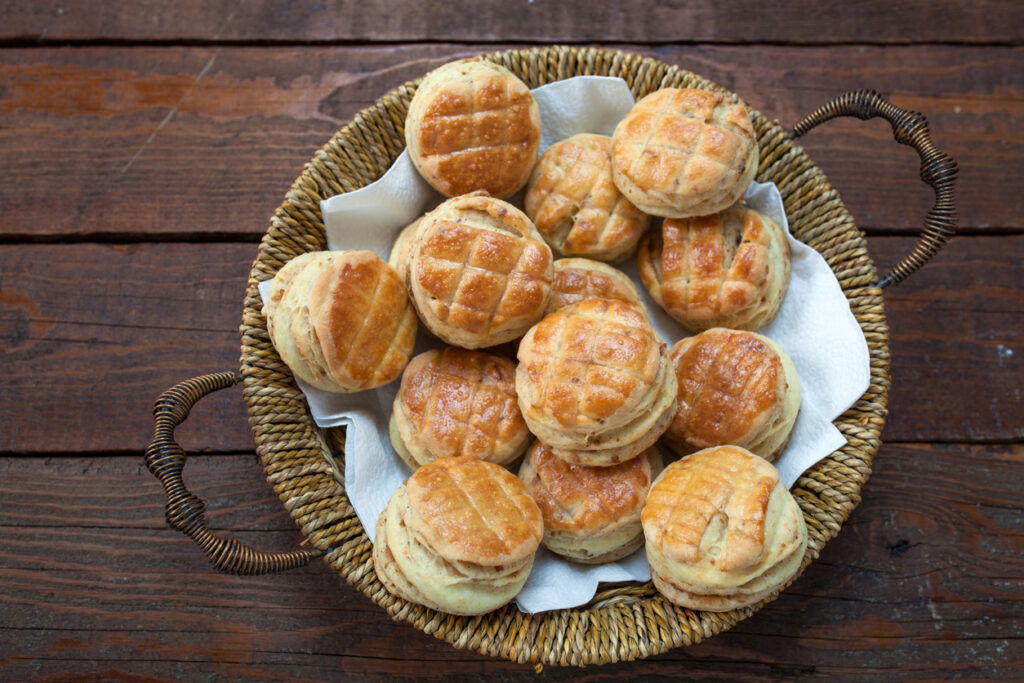
Pogácsa is one of the most beloved savoury snacks in Hungarian cuisine, a small, round, golden pastry that appears everywhere from family gatherings to long train rides across the country.
Preferably, it should be eaten while still hot. Although there are differences in size and flavor, all pogácsa pastries are commonly prepared in a round shape.
Its origins reach back to medieval times, when similar baked goods were prepared for shepherds and travellers. Today, pogácsa has evolved into a versatile category of pastries rather than a single recipe, each region and household having its own version.
The most iconic type is tepertős pogácsa, enriched with finely ground pork cracklings that give it a deep, savoury flavour and a wonderfully layered texture.
Equally popular is sajtos pogácsa, topped or filled with cheese, that melts into a crisp, golden crust.
Burgonyás pogácsa, made with mashed potatoes worked into the dough, is softer and more pillowy, perfect for those who prefer a tender crumb.
In Transdanubia, túrós pogácsa (with quark cheese/cottage cheese) is common, while in some rural areas you’ll find köményes versions scented with caraway. Despite the variations, all pogácsa share a comforting simplicity and a sense of home.
There is no real English word for pogácsa, as it does not exist (at least in this form) in English-speaking countries. You can use the word scone or savory cake or even biscuits (in the US) to give it a name also in English.
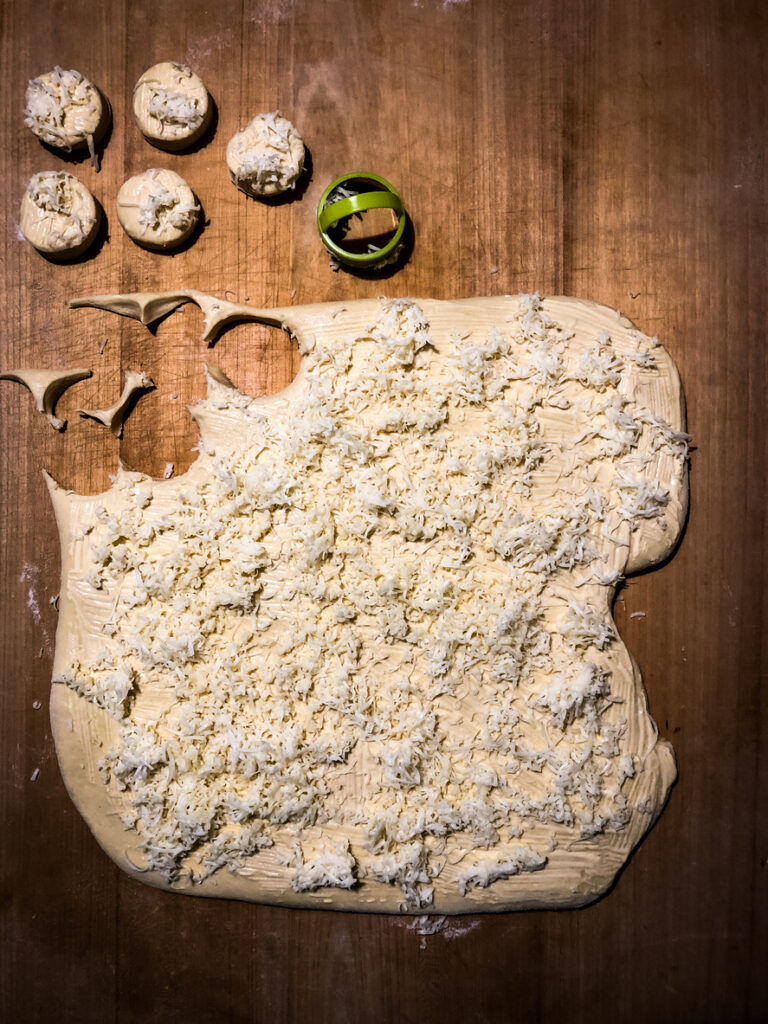
Simple Cheese Scone
Ingredients
Instructions




EGY KIS ÉRDEKESSÉG
Honnan ered a pogácsa szó a magyar nyelvben? A magyar nyelv történeti-etimológiai szótára szerint pogácsa délszláv eredetű, hasonló alakban megvan a bolgárban, a szerb-horvátban és a szlovénben is, és különböző péksüteményeket, kenyér- és lepényféléket jelöl.
Ám a szó nem a szlávban keletkezett, hanem átvétel a kései latinból: forrása a focacea, focacia ’egyfajta sült tészta’, mely a latin focus ’tűz, tűzhely’ (mely így képzésmódját tekintve a lángos rokonának tekinthető). A f > p változás annak köszönhető, hogy a szláv nyelvekben nem volt f (ma is inkább csak idegen vagy hangutánzó szavakban fordul elő), így p-vel helyettesítették.
A focacea ~ focacia folytatása az újlatin nyelvekben is megvan, ilyen a régi francia fouace [fuasz] és az olasz focaccia [fokaccsa] – az utóbbi pizzaszerű, de annál vastagabb sós tészta, de Velence környékén neveznek így egy húsvéti édes süteményt is.
A szó a magyarból bekerült a szlovákba, a magyarból vagy a délszlávból a németbe és a románba, a délszlávból pedig az albánba és a törökbe. Mint a fenti példák is mutatják, időnként változott, milyen süteményt jelöl.
A magyarból is adatolt ’kovásztalan kenyér’ jelentésben is (ilyen lehet a „hamuban sült pogácsa” is), de nevezték pogácsának a méhlepényt is (ami viszont arra utalhat, hogy korábban más alakú és méretű süteményt neveztek pogácsának).
Mindenesetre a mai magyar pogácsát (sőt, pogácsaféléket!) nyugodtan nevezhetjük magyar ételnek, mert ebben a formájukban a magyar konyhán belül alakultak ki.
forrás: Nyest.hu (Nyelv és Tudomány)